

The Uninvited Guests in your Gut

The Uninvited Guests
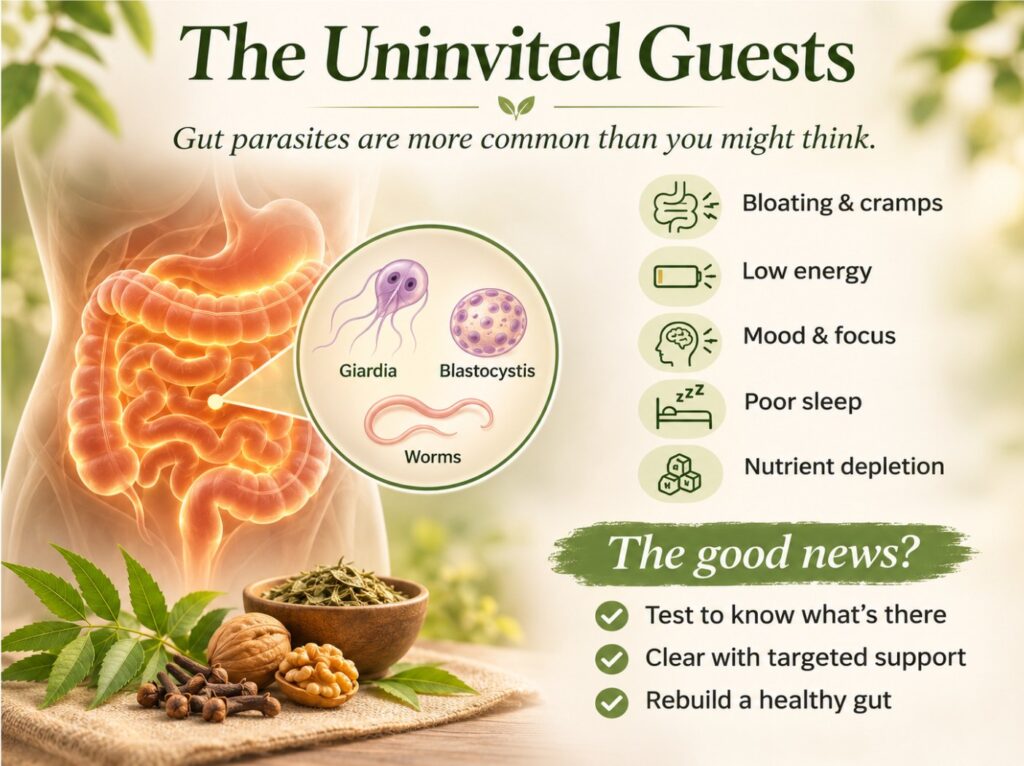
It’s not the most glamorous topic, I know. But parasites are far more common than most people think, and they come up in clinic more often than you’d expect. So let’s talk about them, plainly.
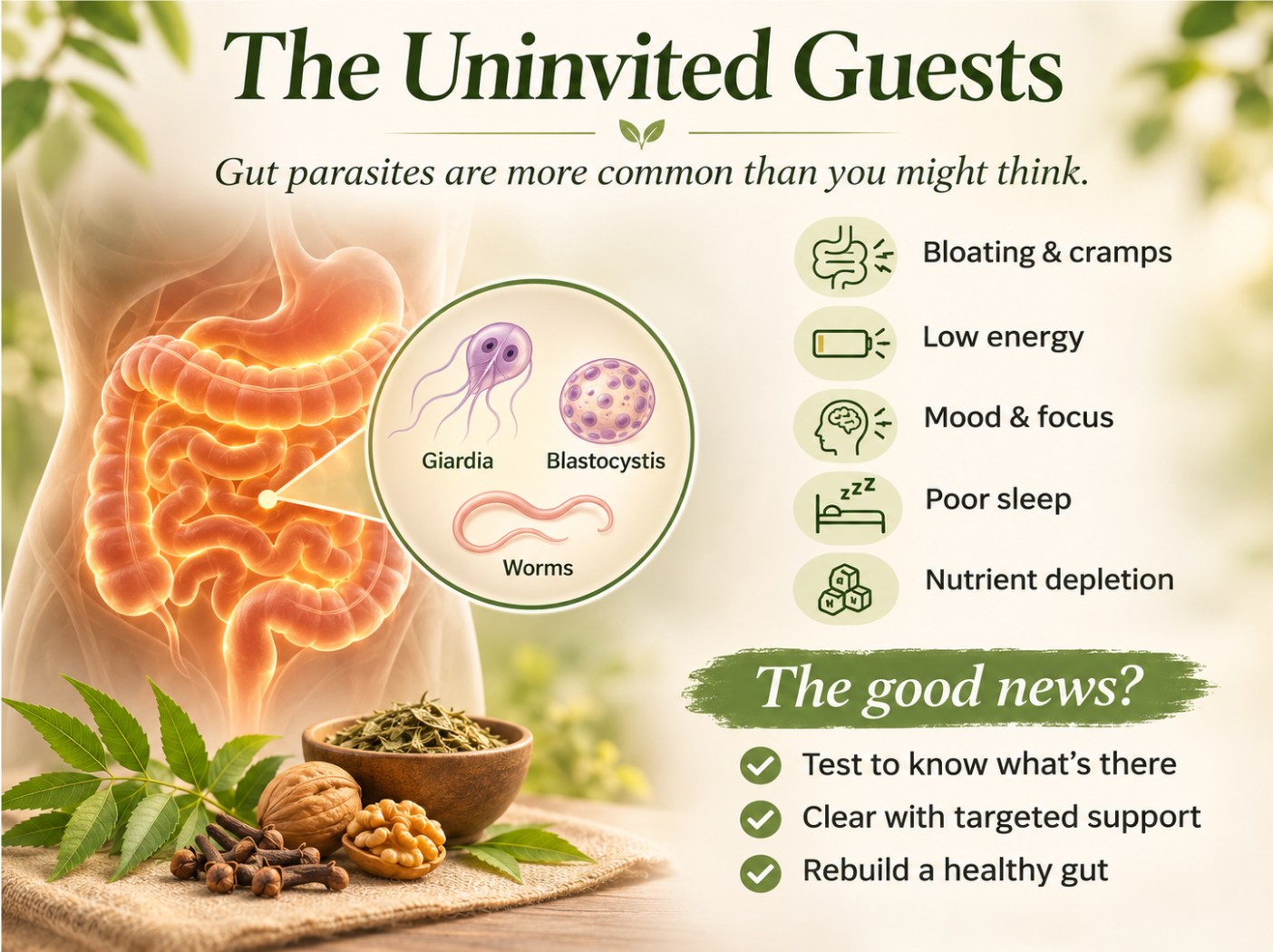
A parasite is an organism that lives in or on you and feeds off you. In the gut, the usual suspects are tiny single-celled ones like Giardia, Blastocystis and Dientamoeba fragilis, and worms like pinworm (very common in kids, and so in their parents). They hitch a ride in contaminated water or food, unwashed hands, pets, garden soil and travel.
Spotlight: Dientamoeba fragilis. This one doesn’t get much airtime, but it’s surprisingly common here in Australia, especially in families with young children. It’s a tiny single-celled parasite that lives in the large bowel. It’s thought to travel inside pinworm eggs, which is why the two often turn up together and why it spreads so easily through households.
Some people carry it with no symptoms at all. Others notice:
-
Ongoing tummy pain or cramping
-
Loose stools or diarrhea that comes and goes
-
Bloating and wind
-
Tiredness
-
Symptoms that look a lot like IBS
Because it’s easy to miss, it’s worth asking about if your gut has been “off” for a while with no clear answer. A stool test (PCR) is the way to find it.
If parasites are left alone, they don’t just sit quietly. Over time, they can:
-
Steal your nutrients, leaving you depleted even when you eat well (some, like hookworm, can lead to low iron and anaemia)
-
Irritate and inflame the gut lining, adding to bloating, food reactions and a “leaky” gut
-
Upset your good bacteria, so the whole gut ecosystem drifts off balance
-
Keep your immune system on alert, which can show up as fatigue, skin issues or allergies
-
In children, affect sleep, mood, behaviour, appetite and growth
When mood or behaviour changes, look at the gut too (at any age). You might be surprised how much of what happens in the gut shows up in the mind. The gut and brain talk to each other all day long through the vagus nerve, the immune system and the chemical messengers made by our gut bacteria. In fact, most of the body’s serotonin, the “feel-good” messenger, is made in the gut.
So when the gut is irritated, inflamed or out of balance, it can show up in the mind, for kids and adults alike.
In adults:
-
Anxiety, low mood or feeling flat
-
Irritability and a short fuse
-
Brain fog and poor concentration
-
Restless or broken sleep, waking around 2–3 am
-
Feeling “wired but tired”
-
Sugar cravings and comfort eating
In children:
-
Meltdowns, tantrums or big emotions
-
Restlessness and trouble sitting still
-
Poor focus at school
-
Trouble sleeping, nightmares or waking at night
-
Grinding teeth
-
Anxiety or clinginess
-
Fussy eating or big sugar cravings
Parasites can play a part. Pinworm itch is worst at night, so the whole household can end up sleeping badly and waking tired and cranky. Gut parasites can also unsettle the microbiome, drain nutrients like iron, zinc and B vitamins that the brain and nervous system rely on, and keep the immune system revved up. A tired, depleted, uncomfortable body, whether it’s 6 or 46, is rarely a calm one.
Of course, mood and behaviour have many causes, and a gut issue isn’t always behind them. But if your mood, sleep or focus (or your child’s) has shifted along with bloating, tummy aches, an itchy bottom or changed eating habits, the gut is worth checking.
Ayurveda has always linked the gut and the mind. When Agni is strong, the mind is clear and settled. When digestion is disturbed and Āma builds up, Vata, the energy of movement, gets thrown off. That often looks like worry, restlessness, poor sleep and scattered attention, in adults and children alike. Settle the gut, and you often settle the mind.
Signs worth paying attention to:
-
Bloating, gas, cramps or nausea
-
Diarrhea, constipation, or a mix of both
-
Greasy, foul-smelling stools
-
Itching around the bottom, especially at night
-
Restless sleep or grinding teeth
-
Anxiety, irritability, brain fog or low mood (and in kids, meltdowns or poor focus)
-
Always hungry, or no appetite at all
-
Strong sugar cravings
-
Unexplained tiredness or weight loss
-
Itchy skin, rashes or hives
-
A coated or patchy tongue
One honest note: these signs overlap with many other gut issues, so they don’t prove you have a parasite. That’s why we test rather than guess.
]The Ayurvedic view: it’s not just the bug, it’s the garden. Ayurveda described parasites, called Krimi, thousands of years ago. The classical texts sorted them by where they live: in the upper gut and mucus, in the bowel, and in the blood. But the bigger insight is why they move in and stay.
Parasites thrive when:
-
Agni, your digestive fire, is low. Strong Agni breaks food down fully and makes the gut a hostile place for unwanted guests.
-
Āma has built up. That sticky, undigested residue is exactly the damp, heavy environment they love.
-
The diet is heavy and sweet. Too much sugar, dairy, processed and incompatible foods feed them and dampen the fire.
So Ayurveda works in three steps:
-
Remove the parasites (with bitter, pungent herbs)
-
Change the terrain so they can’t settle back in (rekindle Agni, clear Āma)
-
Remove the cause (the foods and habits that invited them)
That second step is the one most “parasite cleanses” skip, and it’s why people often find themselves back where they started.
Nature’s bitter allies. Ayurveda calls anti-parasitic herbs krimighna. Traditional favourites include wormwood, black walnut hull, clove and neem. Early research is promising for some of them, though human studies are still limited. They’re strong herbs: not for pregnancy or breastfeeding, not for long-term use, and not something to pick off a shelf without guidance. Your practitioner will choose what suits you and how long to take it.
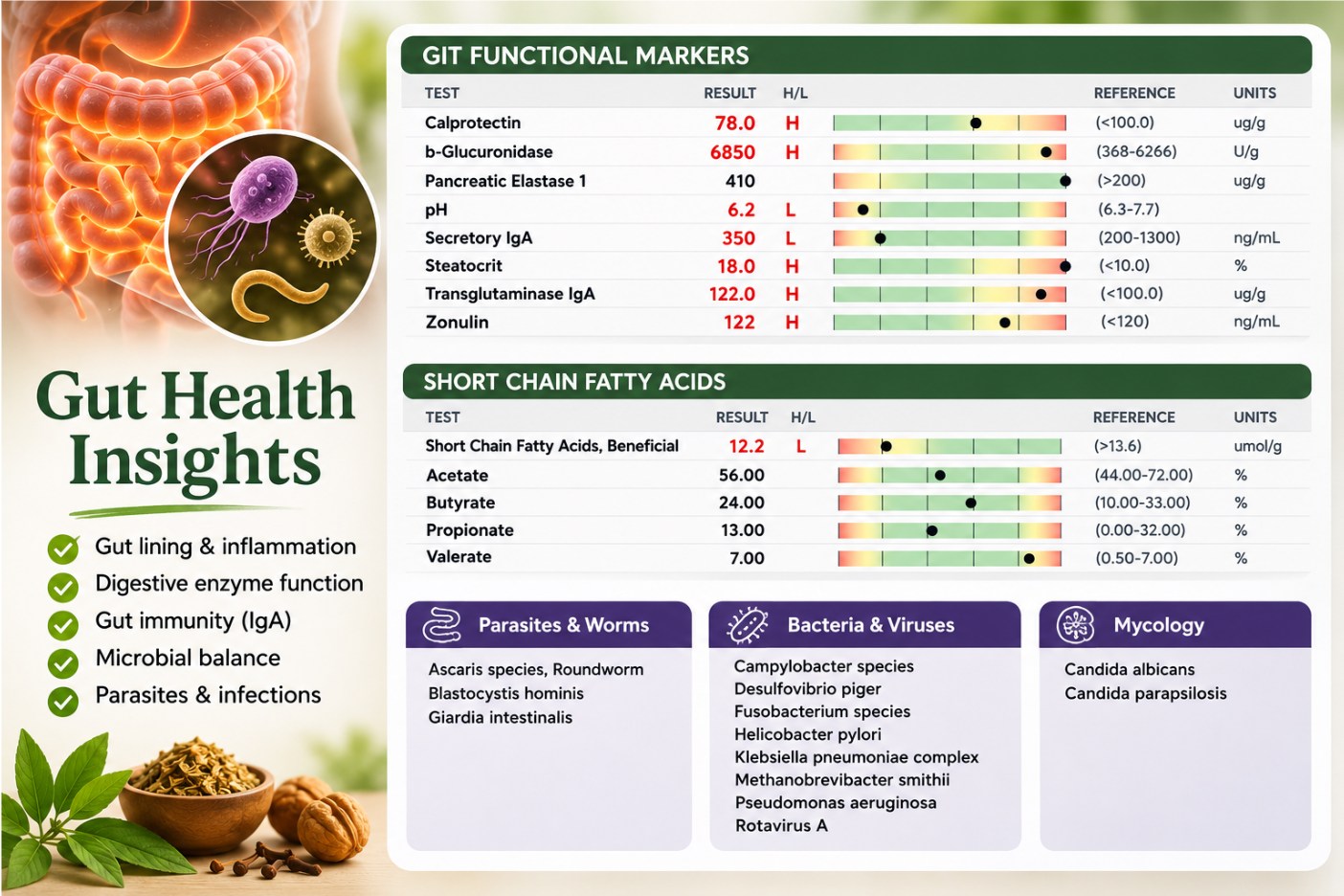
Start with a clear picture. A stool test can show whether parasites like Dientamoeba, Blastocystis or Giardia are actually present, alongside your good bacteria, inflammation and gut lining markers. Then we treat what’s really there. And if one person in the house has a parasite, it’s often worth checking the rest of the family too.
If any of this sounds familiar, book a consult with one of our Ayurvedic doctors or practitioners. We’ll look at your symptoms, your digestion, and whether testing is right for you, then build a plan that clears and rebuilds.