

The Fire That Runs Everything (And Why Spring Puts It Out)

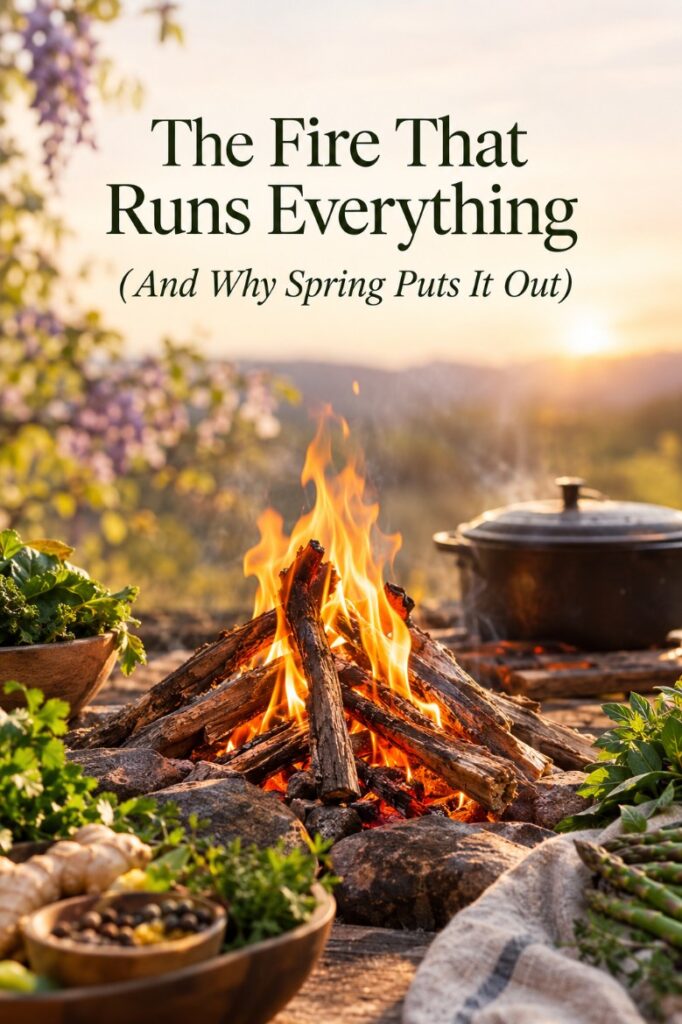
How to cook with the season so Kapha lightens instead of lingering.
Picture a campfire. Feed it good, dry kindling, and it burns clean and steady, throwing off enough heat to cook the whole meal. Smother it with wet leaves, drown it, or starve it of air, and it doesn’t just go out. It smoulders. What’s left behind is a heap of damp, half-burnt ash that sits there doing nothing, going nowhere, fouling the air around it.
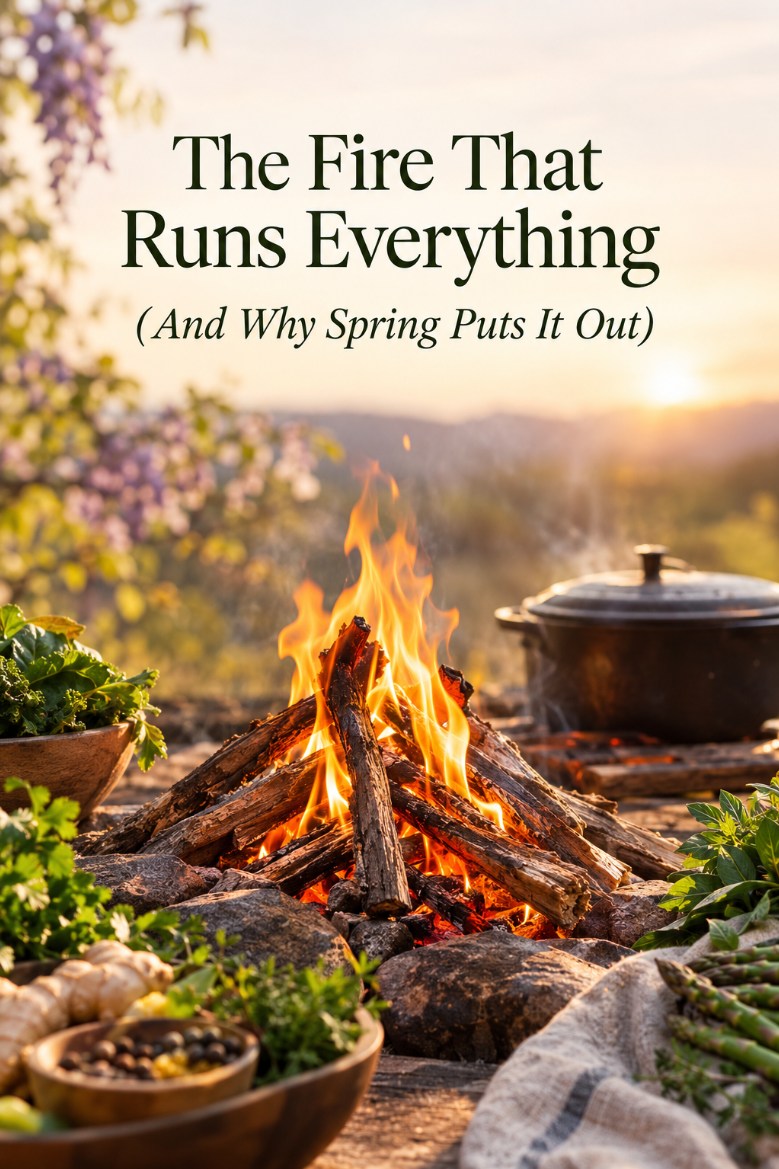
That campfire is sitting inside you right now.
In Ayurveda we call it Agni: your digestive fire. It’s the flame at the centre of every single meal you eat, deciding whether that food becomes energy and clear skin and a steady mood, or whether it just sits there, half-processed. When Agni burns bright, digestion is quiet and forgettable, the way it should be. When Agni is weak, smothered, or starved, food doesn’t fully break down, and what’s left behind has a name too: Āma. Put simply, Āma means toxins, the undigested residue your body can’t use and doesn’t quite know what to do with. It’s the ash in the fire pit. The sludge in the pipes. And it is almost certainly why so many of you feel puffy, foggy, or “just heavy” this time of year, even when you swear you’re eating well.
Before it becomes “just how spring feels,” rising Āma and dwindling Agni tend to announce themselves quietly, in signs that are easy to wave off on their own. Here’s what to watch for:
-
A thick, white or pale coating on your tongue first thing in the morning, before coffee or brushing. This is the easiest one to check yourself, in the mirror.
-
Bloating or heaviness within an hour of eating, even after a meal that looked “light.”
-
Waking up groggy no matter how much sleep you got, and needing caffeine just to feel human.
-
Foggy, sluggish thinking through mid-morning that a good night’s sleep didn’t fix.
-
Sugar or carb cravings that spike an hour or two after a meal.
-
Little to no appetite when you wake up, then ravenous by 11am.
-
Stools that are sticky, incomplete-feeling, or irregular.
-
A puffy face or fingers that weren’t part of your winter reflection.
Low Agni rarely arrives as one dramatic symptom. It arrives as a handful of small, easy-to-dismiss ones that stack up quietly, which is exactly why so many of you have been carrying this for years without a name for it. If you nodded along to two or three of those, that’s not your body being broken. That’s your fire asking for help.
Walk the farmers market this week and you’ll see the antidote before you taste it: rocket with real bite, bunches of coriander, early asparagus, bitter greens that weren’t on the winter tables. Spring in Australia doesn’t just change the weather. It hands you the exact kindling your fire needs right now, if you know what to reach for.
Last week I named the heaviness (if you missed it, click here): Kapha melt, that soft, seasonal release of everything winter stored. Here’s the part I didn’t say out loud yet. That melt has nowhere useful to go unless Agni is strong enough to burn through it. A weak fire lets the melt curdle into Āma. A strong fire clears it out the door. Same spring, same thaw, completely different outcome, and food is the lever that decides which one you get.
In Ayurveda, taste is therapy: six tastes, each with its own job to do. In spring, three of them do the heavy lifting. Bitter lightens and clears. Pungent kindles Agni and moves stagnation, like poking the coals until the flame catches again. Astringent firms things up and dries out excess damp. Sweet, sour, and salty are wonderful in other seasons, but right now, with the air already warm and muggy, they tend to feed the very heaviness you’re trying to shift. That doesn’t mean never. It means dial them down while the season does its work.
In an Australian kitchen, not a textbook, that looks like this:
-
Favour bitter and pungent greens: rocket, watercress, mustard leaves, lightly wilted kale, fresh herbs.
-
Cook light and fresh. Soups that aren’t cream-heavy. Steamed or sautéed veg with cumin, coriander, fennel, ginger, black pepper.
-
Dial dairy down for a few weeks, especially cold milk, cheese plates, and yoghurt bowls first thing. If you love yoghurt, try it warm as a spiced lassi at lunch, not iced at breakfast.
-
Keep oils modest. A teaspoon of ghee or olive oil to cook spices is fuel for the fire. A heavy fry is wet wood, more smoke than flame.
-
Eat your main meal when the sun is high and Agni is strongest. Make dinner the lighter plate.
Here’s the root cause I want you to sit with. I still see clients swing too far the other way: huge cold salads at every meal, skipping warm food entirely because “it’s spring and I should be light.” A cold salad, however virtuous it looks on your plate, is a bucket of water on your campfire. You can’t expect it to cook dinner. Cold and raw douse Agni exactly when you need it steady, and a doused fire digests nothing well, no matter how clean the ingredients were going in. Spring food as medicine is warm, light, and spiced. Not punishment dressed as purity.
A simple pattern for the next seven days: warm spiced veg or a light dahl at lunch, bitter greens on the side, ginger or CCF tea between meals, dinner earlier and smaller, fruit away from heavy meals if it sits on you. If you grab takeaway after a late meeting, choose the lighter option and add black pepper and ginger tea when you get home. Progress, not perfection.
None of this is a full detox. It’s seasonal food hygiene, the quiet work of tending your own fire so November lands easier. Our gut reset starts Monday 2 November 2026. Right now we’re training your Agni to support you, not fight the weather. (And for the clients who’ve asked why their “healthy” diet still leaves them bloated, this is exactly what our gut and metabolic testing is built to uncover: how much Āma has actually built up, and why. More on that below.)
One more note for muggy Australian evenings: they tempt ice cream and cold beer on the deck. Enjoy your life, and notice how your tongue and energy feel the next morning. That feedback loop will teach you more about your own fire than any rule I could hand you.
Educational only, not personal medical advice. If you have a prescribed diet, food allergies, or a condition that limits spices or fibre, adapt with us or your Practitioner or GP