

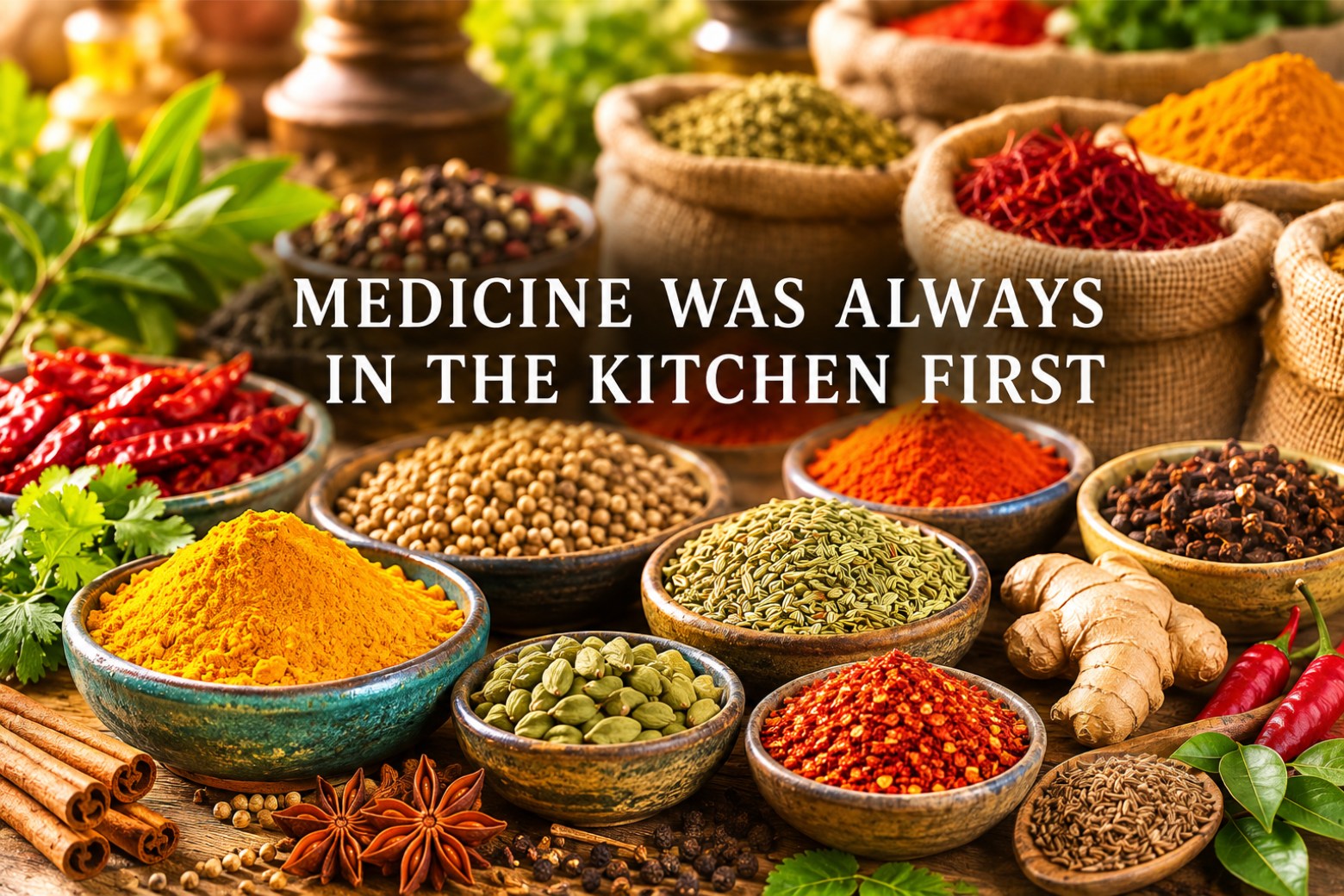
Medicine was Always in the Kitchen First

Your spice drawer is doing more than you think.
Food is medicine, and it’s a truth we forget far too easily in a world of quick fixes and prescriptions. There’s an old Ayurvedic proverb that puts it simply: “When diet is wrong, medicine is of no use; when diet is correct, medicine is of no need.”
That idea sits at the very root of Ayurveda. Food is your first line of defence; what you eat shapes your strength, and a balanced diet prevents far more illness than most people realise. Healing starts in the kitchen, long before it ever needs to reach the pharmacy.
Here’s something most people never think about: the way you cook your food can change what it does to your body, before you even swallow a bite.
High heat, whether it’s grilling, frying, or roasting, doesn’t just brown your dinner. It changes it chemically. Cooking meat at high temperatures forms compounds called heterocyclic amines and polycyclic hydrocarbons, both linked to DNA damage. Starchy foods cooked hot and fast- think toast, roasted potatoes, coffee- form a different compound called acrylamide, flagged by the EPA as a likely carcinogen. And underneath both of these sits a third process, glycation, where sugars and proteins in your food bind together under heat and quietly age both the food and, over time, your tissues.
This isn’t a reason to fear cooking. It’s a reason to cook the way people have for thousands of years, with the right spices doing real protective work while also doing flavour work.
The Ayurvedic Root Cause
At Health Dynamics, we keep coming back to the same principle. The body doesn’t distinguish between “this food tastes good” and “this food is safe.” It just absorbs what you give it. In Ayurveda, spices were never optional flavour add-ons; they were how you made a meal actually digestible and actually safe, thousands of years before anyone had a word for “free radical.” Turmeric and black pepper were never paired by accident. Ginger, cumin, coriander, fennel, and cardamom weren’t chosen at random either. Each one was selected because it did something specific: it protected the food, and it supported the digestive fire, what Ayurveda calls Agni, needed to actually break that food down once it’s in you. |
How to Balance It, Meal by Meal
The research now backs this up with numbers. In one study, marinating meat in turmeric and lemongrass before grilling cut cancer-causing compounds by up to 94 %. Garlic and onion did the same. On the acrylamide side, marjoram and oregano reduced formation by 60 %, allspice by 75 %, and mint by 74 %. Against glycation specifically, star anise and cinnamon each cut damage by 85 %, and cloves by 79 %.
The pattern is simple enough to build into daily life:
- • Before you grill or roast: marinate with turmeric, garlic, ginger, or lemongrass. Even 20 minutes helps.
- Anything roasted, fried, or baked at high heat: add cinnamon, clove, allspice, or oregano to the dish, not just the plate.
- Your daily digestive base, medicated water: this is one of the simplest tools we give clients at Health Dynamics. Simmer cumin, coriander, and fennel seeds in water, then sip it warm through the day. For clients who need extra support, we add ginger and cardamom to the same brew. It’s not just a warm drink; it’s the spices working as medicine, clearing the digestive tract and keeping Agni strong between meals, not just during them.
This is also the reason we don’t hand every client the same spice list. At Health Dynamics, the specific Ayurvedic protocol and the home remedies we give you depend on what’s actually happening in your body. Someone dealing with sluggish digestion needs a different combination than someone dealing with inflammation or heat imbalance. The spices are medicine, and like any medicine, the right dose and combination depends on the person.
One More Piece: Taste Isn’t Just Taste
Ayurveda maps six tastes- sweet, sour, salty, pungent, bitter, astringent- to six emotional states. Most Western meals lean almost entirely on sweet and salty. That’s not just a flavour gap; it’s an emotional one. A meal built with all six tastes leaves you satisfied in a way a meal with two of them can’t, no matter how much of it you eat. Each of the six tastes plays a role in boosting digestion and in providing the emotional satiety and satisfaction that should always be the result of a meal. Having all six tastes present in a single meal is what balances all six of the major emotions at once.
|