

Are You Eating a Credit Card a Week of Harmful Plastic Without Knowing It?


How to Avoid Microplastics in Your Coffee, Tea, and Everyday Life
Did you know that every week, most people eat or drink about a credit card’s worth of plastic without even realising it?
Tiny bits, known as microplastics, are now present everywhere in our food, water, air, and even inside our bodies. Science is still learning about their harmful effects, but in Ayurveda, we’ve known for thousands of years that even the smallest toxins can impact your health and energy.
When the body becomes overloaded, it can’t detox properly. That’s why we want to help you reduce your exposure and keep your body’s cleansing systems strong so you can feel your best every day.

☕ Is Plastic Sneaking Into Your Tea or Coffee?TeaThis might surprise you: some tea bags (especially the ones that look silky or mesh-like) can release billions of tiny plastic pieces when they sit in hot water. What to do instead: ✅ Choose tea bags that say plastic-free or compostable (brands like Pukka, Clipper, and Yogi Tea). ✅ Better yet, use loose-leaf tea in a glass or stainless-steel infuser. Best choice: Loose-leaf tea brewed in glass or stainless steel. |
CoffeeCoffee cups and pods are also sneaky sources of microplastics. What to do instead: These small swaps protect your body, your hormones, and your long-term health. |
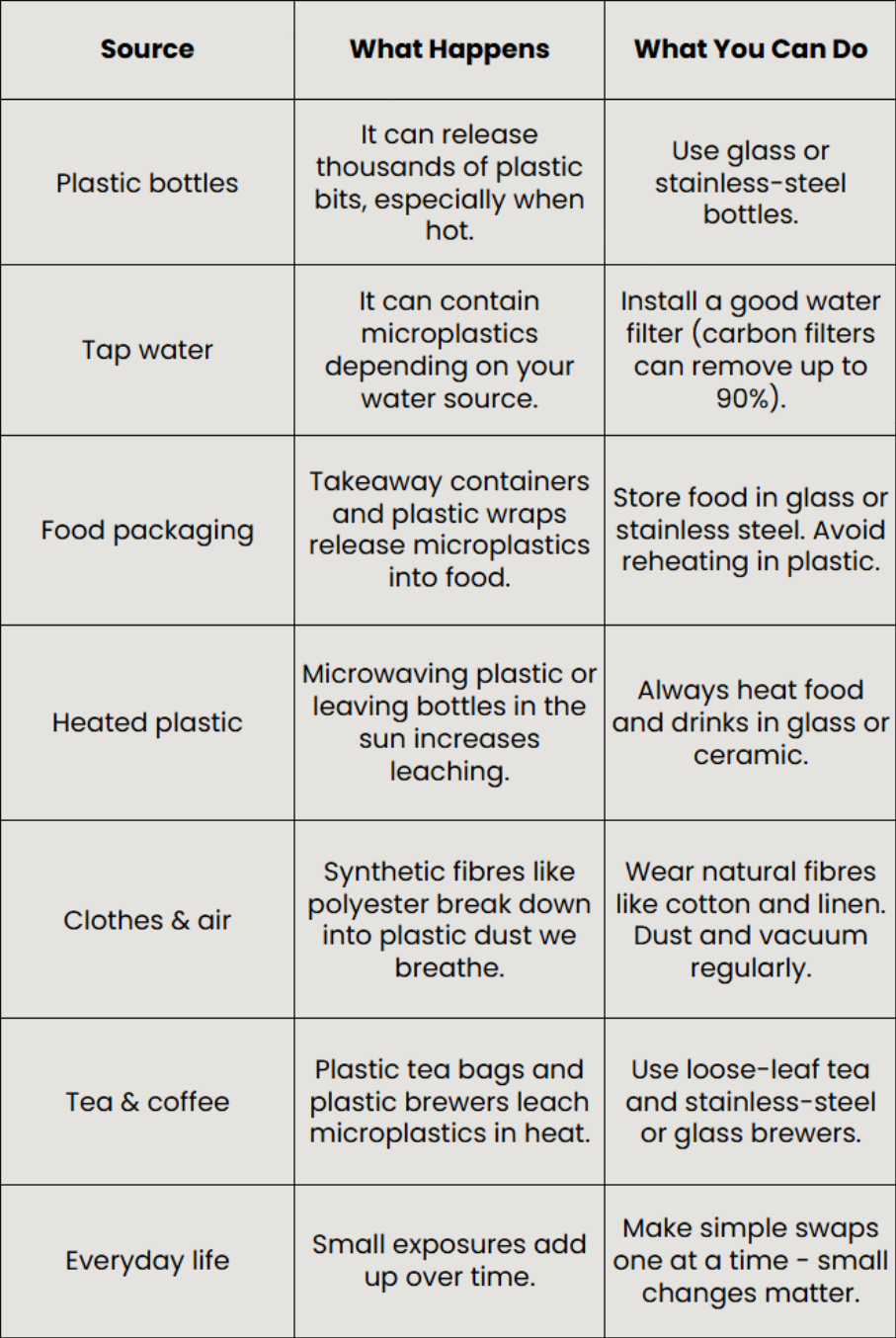
🧴 Where Else Do Microplastics Come From?Microplastics aren’t just in drinks they’re everywhere! |
|
Every little exposure adds up, not all at once, but over the years. So every swap you make now helps protect your future health. |
⚠️ Why Microplastics Are a ProblemFor a long time, people thought plastics just passed through our system. But new studies show they can build up inside the body and cause real problems, especially with our hormones, gut, and immune system. This is one of the reasons for chronic health conditions rising. Here’s what science (and Ayurveda) tells us:
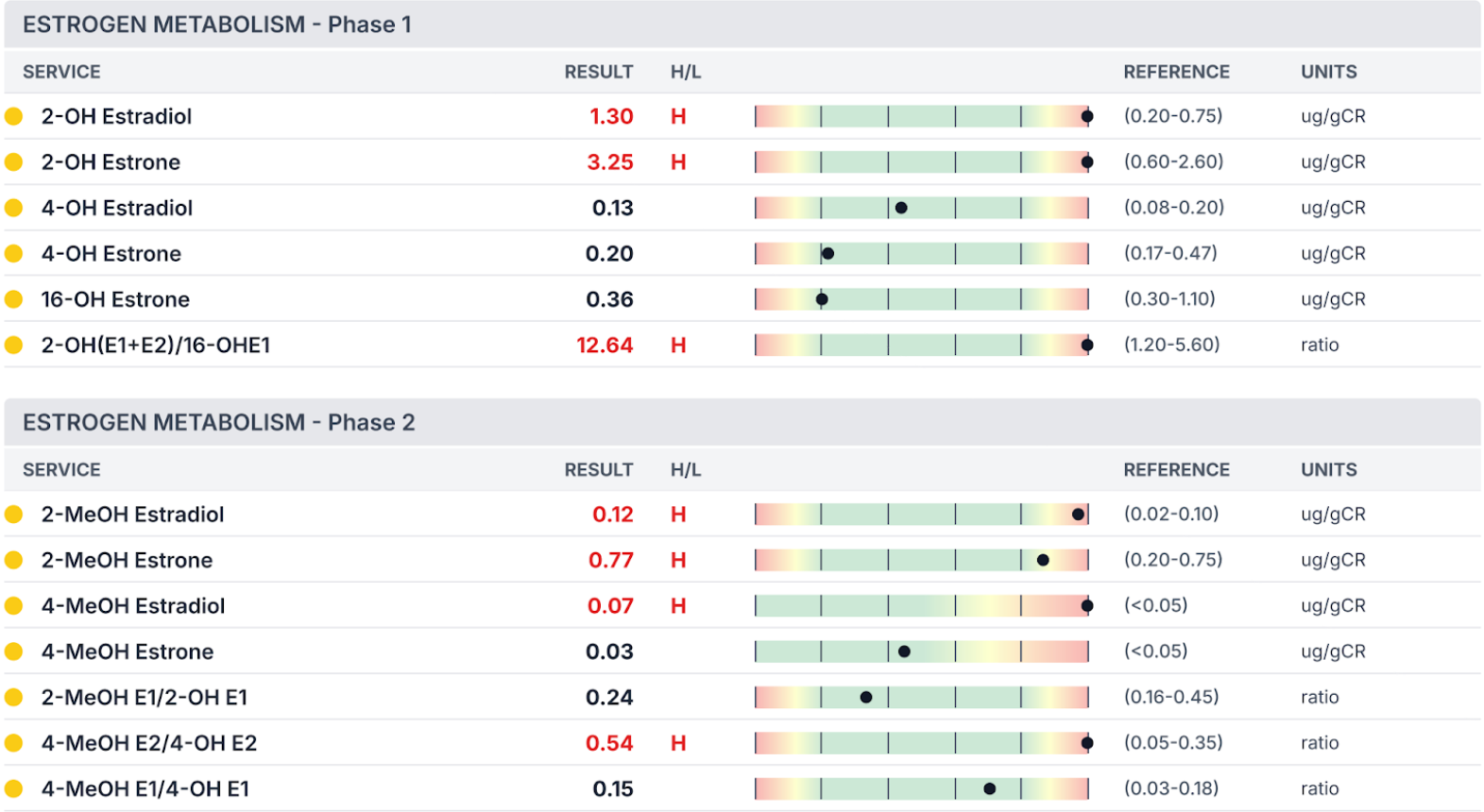
In Ayurveda, this is seen as “ama”, sticky toxins that block your body’s natural flow. The good news is that your body already has an incredible detox system; it just needs support to keep it working well. Why BPA Affects Your HormonesYou’ve probably heard of BPA, it’s that chemical often found in plastic bottles, coffee cup linings, food containers, and even receipts. Your Hormones Are the Body’s MessengersHormones are like little messengers that travel around your body, telling your organs what to do. They control your mood, sleep, energy, digestion, and fertility. Now imagine if someone started sending the wrong messages or copying your body’s natural signals. That’s what BPA does. Here is this client’s hormone test, which shows high levels of BPA in their system. As you can see, both Phase 1 and Phase 2 liver detox pathways are compromised, which means their body isn’t clearing toxins effectively. This disruption is contributing to inflammation throughout the system and showing up as many menopausal symptoms, including hormonal imbalance, fatigue, and mood changes. |
-
BPA Acts Like a “Fake Hormone”
BPA is what scientists call an endocrine disruptor.
It can mimic or block natural hormones, especially oestrogen.
Because its shape looks so much like oestrogen, BPA can attach to hormone receptors in your cells and pretend to be the real thing.This tricks your body into thinking it’s receiving hormonal signals but the signals are all wrong.
The Result? Hormone Confusion and Imbalance
When BPA disrupts hormone balance, you might notice:
-
Weight gain or difficulty losing weight
-
Fatigue or low energy
-
Mood swings or anxiety
-
Irregular periods or fertility challenges
-
Thyroid problems
-
Early puberty in children
-
Higher risk of hormone-related cancers (like breast or prostate)
Even tiny amounts of BPA can have effects because hormones work in very small doses – like a few drops of perfume filling a whole room.
How Ayurveda Understands This
In Ayurveda, chemicals like BPA create “ama”, sticky toxins that block communication pathways in the body.
When those channels are blocked, your body’s natural intelligence can’t send clear messages.
That’s when fatigue, poor digestion, and hormone imbalance begin.So while modern science calls it “endocrine disruption,” Ayurveda has described the same problem for thousands of years: toxins blocking balance.
 How to Protect Yourself
You don’t need to avoid life, just make smarter choices:
 Use glass or stainless-steel containers Avoid microwaving food in plastic Skip plastic-lined takeaway cups Choose fresh food over canned Move, sweat, and eat fibre-rich foods daily
Your body already knows how to heal; you just need to give it the right conditions.
-
-
5 Simple Ways to Help Your Body Detox Naturally
Even if you’re doing your best, you’ll still come into contact with microplastics.
Here’s how to help your body clean them out: Eat Fibre-Rich and Colourful Foods
Fibre helps move toxins (including plastics) out through your digestion.
Eat plenty of vegetables, fruits, seeds, and legumes.
Berries, leafy greens, and citrus fruits are high in antioxidants that protect your cells. Do an Ayurvedic Cleanse
A seasonal cleanse resets your digestion, the first step in good detoxing.
It helps your liver, gallbladder, and gut work together again so your body can process and remove toxins naturally.
We run guided cleanses(28-day detox, see below for more details of the next intake) to help you do this safely and effectively. Sweat Every Day
Movement and heat help toxins leave through your skin.
Exercise, sauna, or even a brisk walk can make a big difference. Support Your Gut
Your gut and microbiome are your first line of defence.
Feed them well with probiotic foods (like sauerkraut, kefir, or yoghurt, only small amounts are needed) and prebiotic fibres (like oats, flaxseeds, and legumes).
Eat seasonally, nature gives you the right foods at the right time. Use Herbs for Extra Support
Ayurveda has powerful herbs that support natural detox pathways:
 Chelation Support – helps pull out toxins and heavy metals (this depends on each client) Turmeric Plus – protects cells and reduces inflammation Tulsi (Holy Basil) – supports stress response and detox pathways
Final Thoughts
Microplastics are everywhere, but you can protect yourself with simple, daily habits.
Choose glass over plastic. Eat more plants and fibre. Support your body’s natural detox with movement, herbs, and seasonal cleansing.Ayurveda teaches that you can’t always control your environment, but you can always build a strong, intelligent body that knows how to heal and adapt.
Every small choice adds up to a big change.
Start with your morning cup and make it one that supports your health, not harms it.