

The Magic of Spring Foods: How Bitter Foods Help You Feel Light and Fresh and Even Lose Weight


When spring arrives, the air feels softer, the flowers bloom, and everything starts to wake up after winter’s sleep.
But guess what? Our bodies also need a spring clean!
During winter, we often eat heavier, warmer foods soups, stews, bread, and comfort meals. They keep us cosy, but when spring comes, that heaviness can make us feel a little slow, tired, or stuffy.
Ayurveda (that’s an ancient Indian way of understanding health) says this happens because of something called Kapha it’s the energy that’s cool, heavy, and sticky, like mud after rain.
When we have too much Kapha, (earth & water element) we might feel:
-
Sleepy or sluggish in the morning
-
Bloated or heavy after meals
-
Stuffy in the nose or chest
-
Or just not as sparkly as we want to feel
So, how do we help our body “wake up” and get that sparkle back?
We eat foods that do the opposite of heavy and sticky foods that are light, warm, and a little bit bitter or spicy!
What Does “Bitter” Mean?
Bitter foods don’t taste sweet they taste more like leafy greens or herbs.
Think about how rocket (arugula) or kale tastes that little “bite” or “zing” on your tongue.
That taste actually tells your body: “Hey! It’s time to clean up and get moving!”
In Ayurveda, bitter foods help your body: Clear out mucus and heaviness Wake up your digestion (the fire in your belly!) Feel lighter, clearer, and more energised
 Spring’s Super-Helper Foods
Here are some wonderful foods to add to your plate when the weather warms up
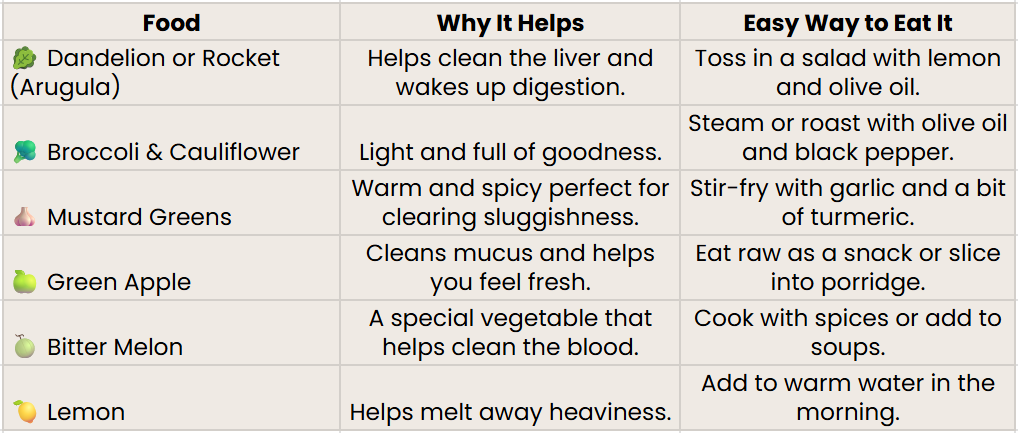
Spices That Help You Feel Awake
You don’t need fancy herbs just use your spice rack!
These help your body “spring clean” from the inside:
-
Ginger: melts away mucus and boosts energy.
-
Turmeric: keeps your body strong and your skin glowing.
-
Black Pepper: helps you absorb all the good stuff from food.
-
Cumin & Coriander: help your belly feel calm and happy.
 Try This: Morning Spring Starter
What you’ll need:
-
1 cup of warm water
-
Juice from ½ lemon
-
1 tsp of fresh grated ginger
-
1 tsp of honey added once it is cooled down
How to make it:
Put everything in your cup, stir, and sip slowly.
This wakes up your tummy and tells your body it’s time to start the day!
Why This Matters
Spring is nature’s way of saying “Let’s begin again.”
When we eat foods that match the season light, green, and a little bit bitter we help our body feel balanced and bright.
You’ll notice: More energy Clearer skin Better digestion A lighter, happier mood
The Big Message
Nature is smart it gives us exactly what we need, exactly when we need it. We don’t see animals in the wild sick as they live by nature.
In spring, the world grows green again, and those same green, slightly bitter foods are your body’s best friends.
So eat with the seasons, move a little every day, and enjoy the feeling of freshness that comes when you live in rhythm with nature.
|
Ingredients
How to Make It
|
 Wellness Tip of the Week is a Recipe
 Spring Cleanse Kitchari
Why It’s Great
This gentle meal is your body’s perfect spring reset.
It’s light, nourishing, and easy to digest – helping to:
-
Melt away winter heaviness
-
Support healthy digestion and gut balance
-
Reduce Kapha (the body’s cool, heavy energy)
-
Keep your energy calm and steady all day
Longevity Is Not Just About Living Longer
Longevity is about:
-
Mental clarity
-
Emotional resilience
-
Physical vitality
-
Purpose and fulfilment
It is about living well now, while protecting your future self from preventable decline.
This is the lens we use at Health Dynamics, and why nutrients like B12 are never treated as an afterthought.
If you would like support reviewing your levels, medications or digestive health, our team is here to guide you.
Warmly,
Jo Formosa
Clinical Director | Integrative Health & Longevity Strategist
Health Dynamics